Blog · September 25, 2026 · Vacant land
How to Find Out if a Property Is Landlocked
Cheap acreage listings often share one hidden flaw: no legal way in. A dirt track across a neighbor’s field is not the same as a recorded right to use it. Before you buy a vacant lot, a hunting tract or a cabin site, work through these checks to find out whether the land has real access.
Platbookmapper is an Amazon Associate. If you buy through an Amazon link on this page, we earn a commission. The link is a product, not the county map.
What landlocked really means
A parcel is landlocked when there is no legal route from it to a public road. The word legal matters. A property can have a gravel lane, a gate and years of use and still lack the recorded right that a lender, title insurer or future buyer will want. The reverse is also true: a parcel can have a perfectly valid easement on paper that no one has cleared in decades.
There are two questions to answer. Is there a recorded right to cross other land to reach a public road, or does the parcel touch a public road itself? And can you physically use that route with a car or truck?
Check 1: Look at the parcel map
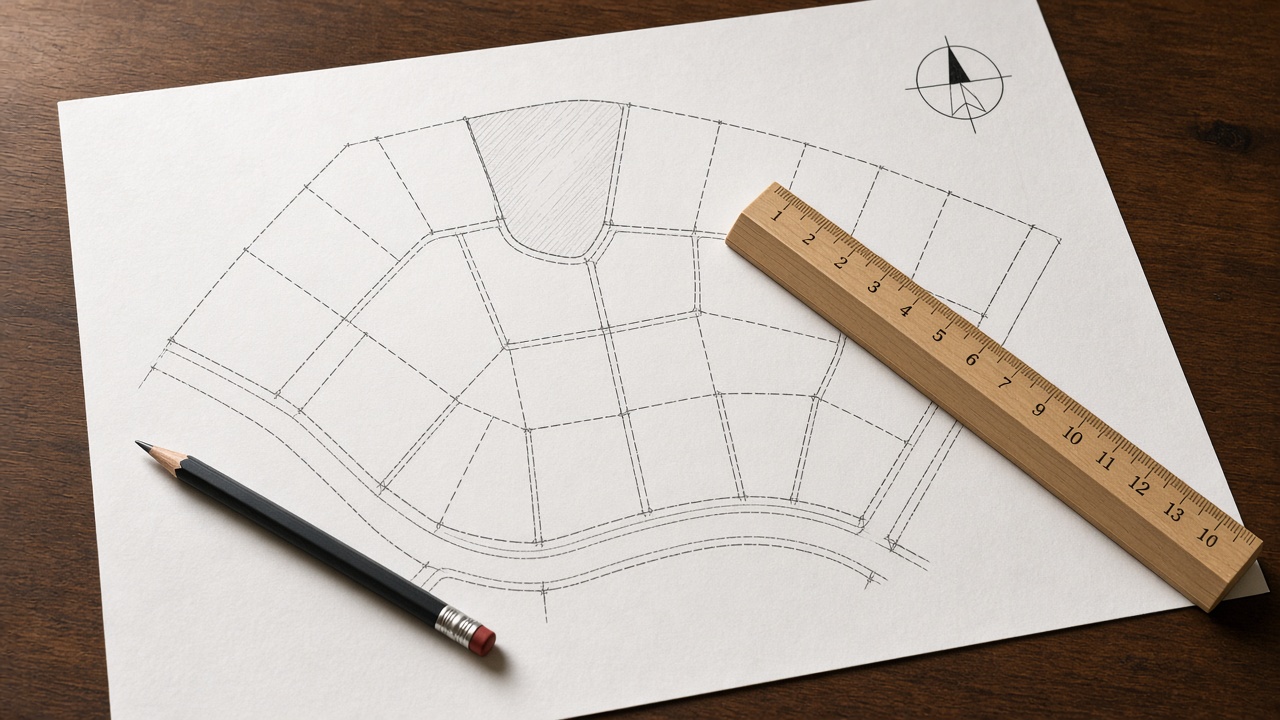
Open the county parcel viewer, search the parcel number or owner, and zoom out. Does the parcel touch a road? If it does, check that the road is public. Parcel viewers often show road right-of-way as a gap between lots, or label private roads differently. If the parcel sits behind other lots with no frontage, write down the owners of every parcel between it and the nearest public road. Our guide to right-of-way and road frontage in a parcel viewer explains how to read those gaps.
Look for thin strips. A narrow flag-shaped extension reaching the road, or a separate skinny parcel owned by the same person, may be the access. Also check whether the seller owns an adjoining parcel that has frontage; if both are sold together, access may not be an issue, but if they are sold separately it can be.
Check 2: Search the recorded documents
Access rights are usually created by recorded documents: an easement deed, a road maintenance agreement, a reservation in an older deed, or a subdivision plat that dedicates roads. Search the county recorder or register of deeds index under the current and past owners’ names. Read the legal description in each deed for phrases such as “together with an easement for ingress and egress.” Plats are especially helpful in rural subdivisions, because they show which roads were dedicated to the public and which were kept private. See our explainer on finding an easement on a parcel map.
Check 3: Read the title commitment closely
When you are under contract, the title company issues a commitment listing what the policy will and will not cover. An exception for lack of a right of access is a red flag. Ask the title officer directly whether the policy will insure access, and if not, why. Their answer often tells you more than the listing ever will.
Check 4: Walk the route
Drive or walk the path from the public road to the parcel. Note gates, locks, washouts, creek crossings and places where the track leaves the recorded easement. Look for signs that the road is maintained by a county or township. If the only route crosses a neighbor’s field without any document, you are relying on goodwill that can end with the next sale.
Check 5: Get a survey
A licensed surveyor can locate the easement on the ground and show whether the driveway actually sits inside it. This matters more than people think. Old driveways often wander outside the recorded strip, and new ones may need to be moved to stay within it. Our article on what a land survey includes covers what to ask for.
If the land is landlocked
Some landlocked parcels are still worth buying, but only with a plan and a price that reflects the risk. Common paths include:
- Negotiating a written easement with a neighbor before closing, and making the purchase contingent on it.
- Buying a strip of land for a driveway.
- Asking whether the parcel qualifies for an easement by necessity, which some states recognize when land was cut off by an earlier split. These claims depend on state law and history and usually need an attorney.
- Accepting water or foot access only, for recreational land where that is enough.
Keep in mind that a lender may refuse to finance land without insurable access, and resale can be hard. Hunters and recreational buyers sometimes accept those limits for the right price, but builders rarely can, since a building permit often requires frontage on an approved road.
Quick checklist
- Parcel touches a public road, or a recorded easement connects it to one.
- The road is public or covered by a recorded maintenance agreement.
- The title commitment has no access exception.
- The physical route stays inside the easement.
- Local zoning allows building with the access you have.
Start with the county map: find your county on the national map or in the directory by state, then work down the list. Our vacant land parcel search guide covers other checks for raw land.
Frequently asked questions
Can a property with a driveway still be landlocked?
Yes. If the driveway crosses someone else’s land without a recorded easement or public road, the parcel may lack legal access.
How do I check if land has an access easement?
Search the county recorder’s index for easement deeds, older deeds and plats, and ask the title company whether the policy will insure access.
Will the county parcel map show if land is landlocked?
It shows whether the parcel touches a road and who owns the land between it and the road, but it does not show recorded easements in most counties.
Can I get a loan on landlocked land?
Many lenders will not lend without insurable access. Ask your lender before you commit.
Open the Platbookmapper county map Browse the county GIS directory by state
Not a survey. County GIS and tax parcel maps are assessment and planning layers. They are not a substitute for a recorded plat, deed, or licensed survey — especially for fences, setbacks, or boundary disputes.